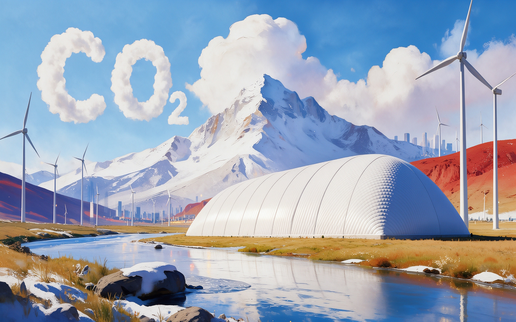
In 2026, China's "Dual Carbon" journey—aiming for peak carbon emissions and carbon neutrality—has reached a pivotal new milestone.
This year, non-fossil fuel power generation accounts for 62% of total installed capacity, with solar PV historically surpassing coal to become the nation's primary power source. The national carbon market has expanded to include steel, cement, and aluminum smelting, bringing over 65% of the country's total emissions under regulatory control.
Furthermore, China has officially shifted from controlling energy consumption to controlling carbon emissions, transforming decarbonization from a mere initiative into a binding, measurable, and enforceable mandate. Meanwhile, electric vehicles have become a staple in millions of households, industrial enterprises are accelerating energy-efficiency upgrades, and green manufacturing alongside the circular economy continues to thrive.
China's emission reduction efforts are now extending from power generation to every facet of industrial production, urban construction, and daily life.
As a major consumer of resources and energy, the construction sector is inherently a heavyweight in carbon emissions. From building material production and on-site construction to dust containment and operational energy use, every link in the chain carries a carbon footprint.
As our power grid becomes increasingly green, can our architectural spaces also become lighter, faster to build, less material-intensive, and more recyclable? This is precisely the question that air dome technology answers.
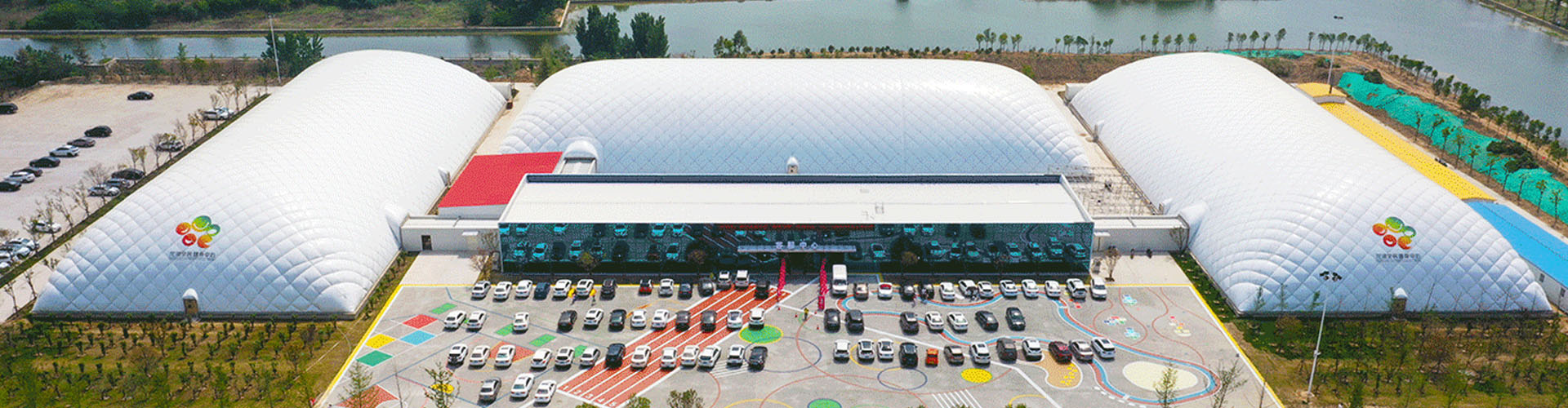
Air-supported structures—commonly known as air domes—do not generate electricity, directly replace coal power, or trade directly on the carbon market. Instead, they contribute to decarbonization from a different dimension: using lightweight structures to minimize material input, leveraging factory prefabrication to boost construction efficiency, utilizing superior airtightness to control dust and pollution, and enabling easy disassembly and reuse to lower whole-life-cycle carbon costs.
As early as 2011, Broadwell designed and built China's first enclosed coal storage dome—the Shenhua Group Bayannur Air Dome Coal Shed. As a pioneering application of air-supported architecture in China's industrial sector, it blazed a trail for enclosing large-scale industrial stockyards and marked Broadwell's starting point in championing industrial green transition and low-carbon construction.
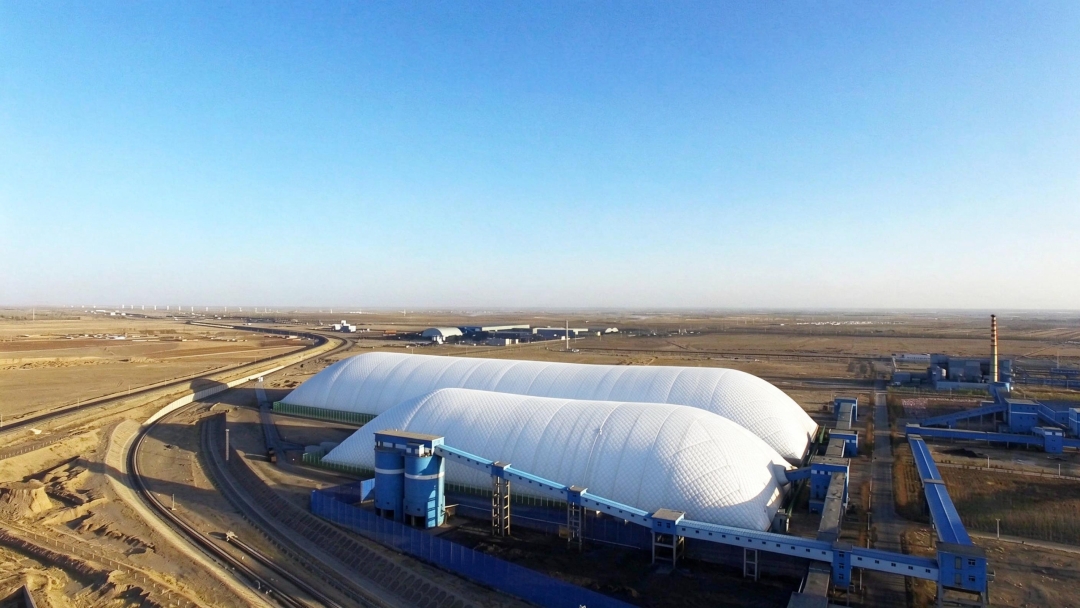
(Caption: China's first enclosed air-supported coal storage facility — Shenhua Group Bayannur Air Dome Coal Shed)
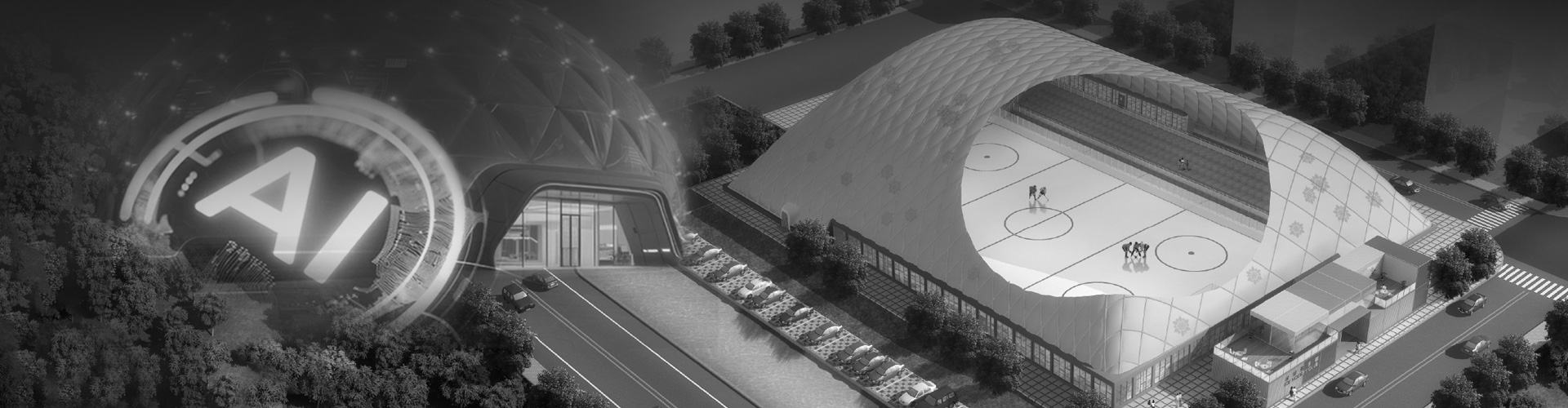
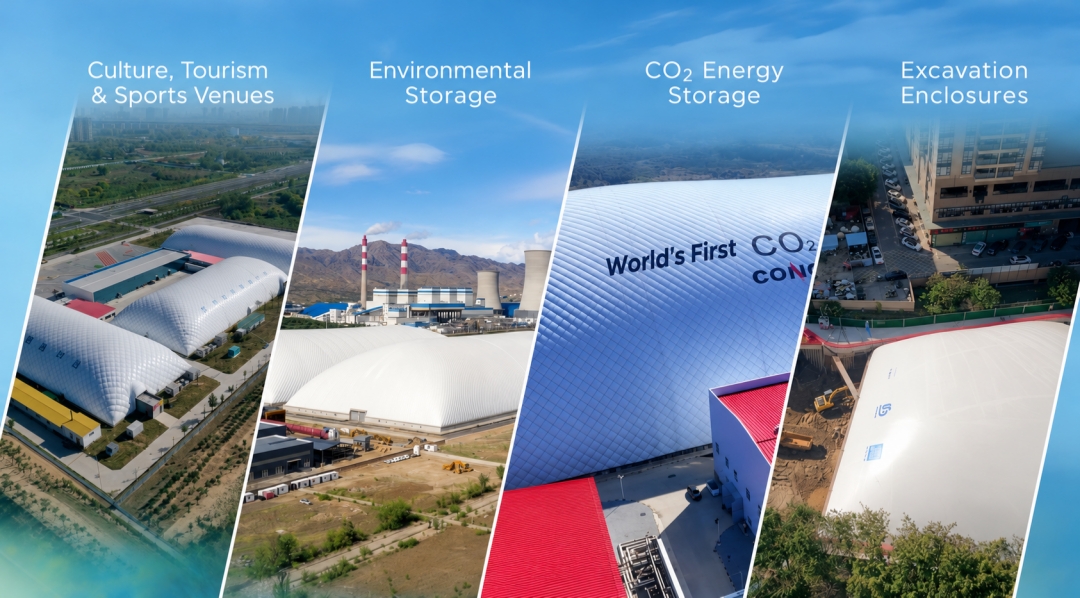
Over the subsequent 15 years, Broadwell has continuously expanded air dome technology into a wider array of application scenarios. Spanning industrial stockyard enclosures, environmental remediation covers, and energy storage to warehousing, logistics, sports, and cultural tourism, air-supported structures contribute to China's decarbonization across two main dimensions: low-carbon value (reducing material consumption, construction energy use, operational energy demand, and full-life-cycle emissions) and environmental value (curbing dust, noise, odors, and pollutant dispersion).
01 Lightweight Structures: Reducing Resource Consumption During Construction
Air domes utilize lightweight architectural membranes and cable-net systems. Compared to conventional large-span buildings, they drastically cut down on structural materials, thereby reducing the resources needed for transportation, foundations, and on-site assembly. Taking a 10,000-square-meter large-span space as an example, an air dome uses roughly 80% to 95% less steel than a traditional steel structure during the material phase—saving hundreds of tons of steel. Foundation concrete usage drops by about 70%, and earthwork excavation is reduced by over 60%.
02 Factory Prefabrication: Minimizing Waste on the Job Site
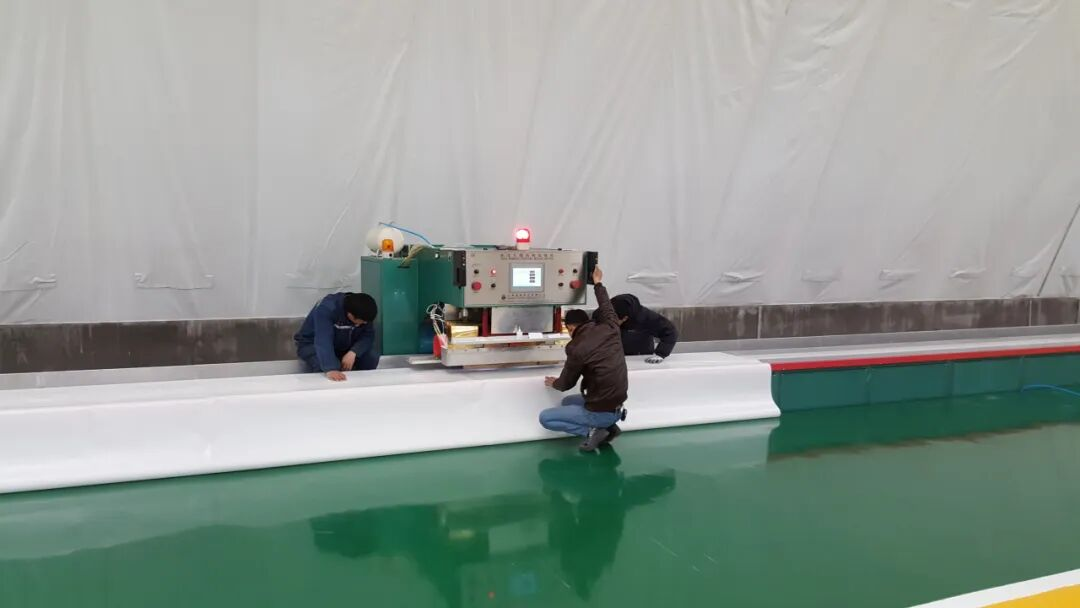
Membrane materials undergo precision processing inside a factory, leaving on-site work primarily to installation and inflation. This significantly reduces on-site wet trade work, material waste, heavy machinery deployment, and construction energy consumption. Consequently, the construction timeline of an air dome can be shortened to roughly 1/3 to 1/5 of that of a traditional building, lowering construction-phase carbon emissions by approximately 50% to 70%.
03 High-Efficiency Envelopes and Smart Controls: Lowering Operational Energy Use
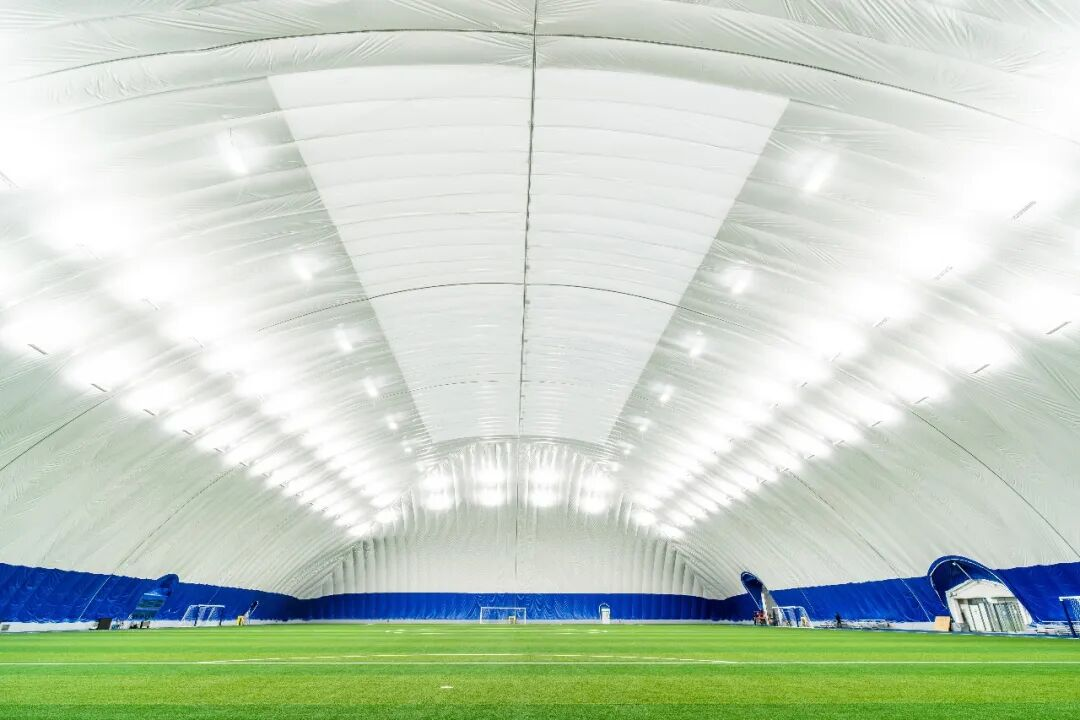
By combining thermal insulation systems, high-efficiency blowers, constant-pressure controls, and smart climate regulation, air domes minimize energy waste during operation—enhancing energy efficiency while maintaining an optimal indoor environment. The overall operational energy consumption of an air dome is typically 30% to 50% lower than that of conventional buildings. Every 10,000 ㎡ of building space cuts annual carbon emissions by approximately 32 to 48 tons (factoring in HVAC loads alone). When accounting for daytime lighting savings provided by translucent membranes, total annual carbon reductions can exceed 260 tons.
04 Environmental Applications: Mitigating the Ecological Impact of Industrial and Urban Activity
Applications such as environmental storage domes, excavation pit air domes, and wastewater or contaminated soil covers use fully enclosed spaces to "trap" dust, odors, and pollutants generated during industrial production and urban construction. This prevents fugitive emissions and reduces the environmental impact on surrounding communities right at the source.
Take the Shenhua Group Bayannur Air Dome Coal Shed, for instance. Over its 15 years of operation, the project has prevented the wind-blown loss of roughly 6,000 tons of coal annually—totaling around 90,000 tons of saved coal and cutting CO2 emissions by approximately 234,000 tons.
Meanwhile, excavation pit air domes (used over construction sites) are rapidly gaining traction, with deployments in cities like Beijing, Guangzhou, Shenzhen, Jinan, Chengdu, Wuhan, and Jinhua—including 32 completed projects in Beijing alone. With the most extensive single-dome coverage reaching 25,000 ㎡, these structures reduce dust by 90% to 99% and cut noise by up to 40 decibels. In Guangzhou, one such project shortened the construction schedule by 171 days, generating comprehensive economic benefits exceeding 46 million RMB. From industrial stockyards to urban construction pits, environmental air domes are driving down the ecological cost of production and making green construction both quantifiable and tangible.
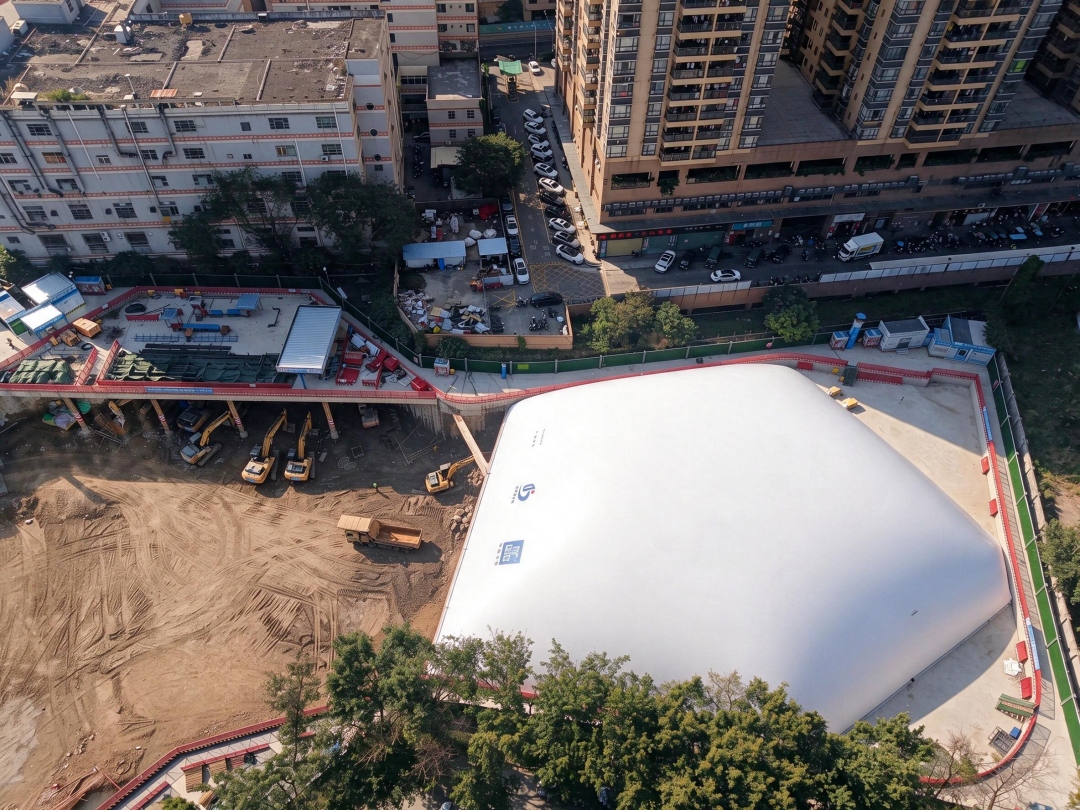
(Caption: The Bao'an Traffic Police Brigade Excavation Pit Air Dome Project in Bao'an District, Shenzhen)
Going beyond lightweight, low-carbon construction on the building front, Broadwell's air-supported gas storage technology has, in recent years, become deeply integrated into the construction of China's next-generation CO2 energy storage power stations. By helping revitalize green power on the energy supply side, this technology enables growing volumes of solar and wind power to be stably absorbed into the grid, supporting the steady implementation of China's dual-control carbon emission targets.
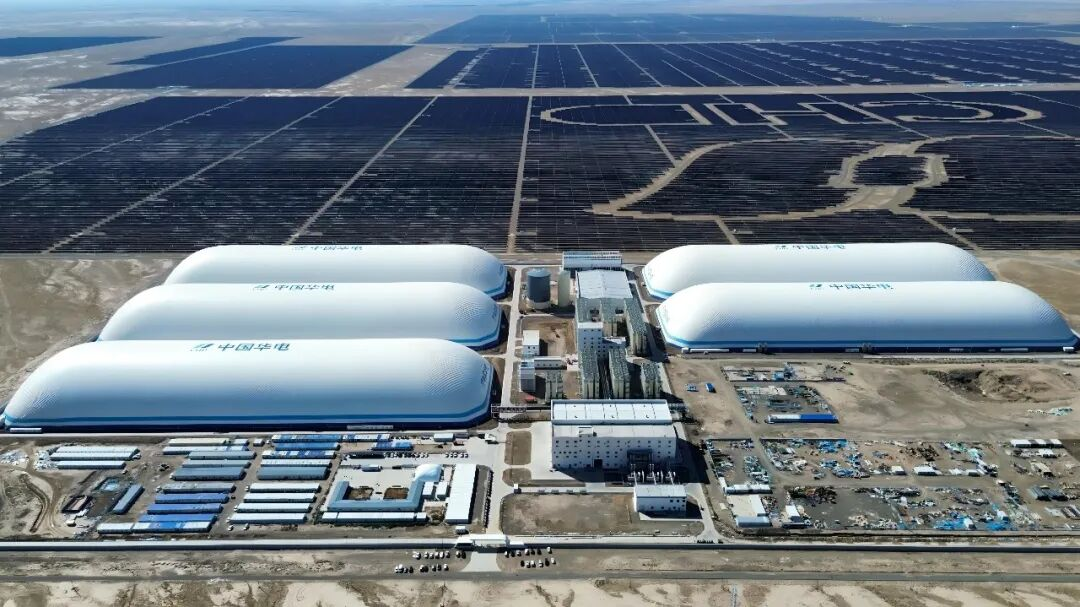
(Caption: China's first 100-megawatt-class compressed CO2 energy storage project — China Huadian Corporation's Mulei Compressed CO2 Energy Storage Project in Xinjiang)
Starting from a single coal storage dome and expanding into diverse sectors such as industry, municipal engineering, sports, warehousing, and energy storage, air-supported architecture has forged a low-carbon construction path characterized by lightweight design, minimal material consumption, and high recyclability. In this new era of strict carbon emission controls, air dome technology—spearheaded by pioneers like Broadwell—will continue to leverage flexible, lightweight structures to unlock the decarbonization potential of large-span spaces. By delivering practical, quantifiable spatial solutions for green industry and low-carbon cities, it contributes a steady, vital force to China's grand journey toward its Dual Carbon goals.